Voicemail Might Be The Most Expensive Feature Hospitality Businesses Still Use.
"Please leave a message after the tone" might be the fastest way to lose a booking in 2026.
I'm convinced most hospitality businesses dramatically underestimate how much damage voicemail causes. Hotels, restaurants, resorts, spas, and guesthouses continue treating voicemail like a safety net, but I think it's become something else entirely. In many cases, it's become a silent booking killer.
Think about your own behavior for a second. When was the last time you enthusiastically left a voicemail? Most people don't. They hang up. They search for another option. They send a message somewhere else. Or worse, they simply book with a competitor who answered first.
Hospitality has always been built around responsiveness. Guests want answers when they're ready to make decisions. They don't want to leave a message and hope somebody calls back later. They want help now.
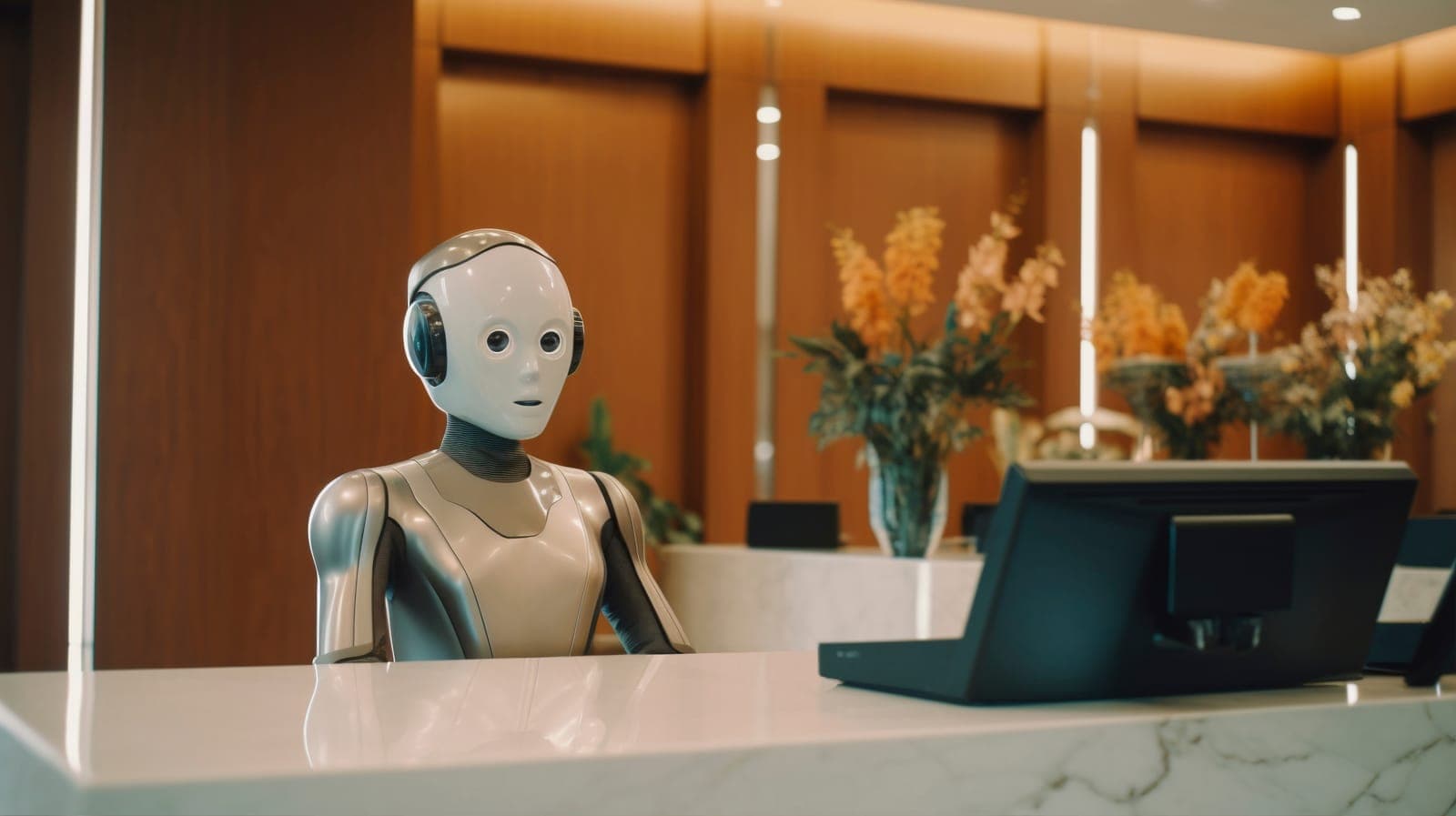
That's exactly why we're seeing more businesses replace voicemail with an ai voice assistant. Instead of collecting messages that may never lead to conversions, Voice AI can answer immediately, assist guests, collect reservation information, and keep the conversation moving toward a booking.
We recently discussed this shift in How Voice AI Is Changing Hospitality Customer Service. Hospitality businesses are discovering that availability is quickly becoming one of the biggest competitive advantages in the industry.
And voicemail simply wasn't designed for a world where customers expect immediate answers.
Every Voicemail Represents Friction.
Most hospitality businesses think voicemail is better than missing a call entirely. Technically that's true. But I think it's setting the bar far too low. Customers don't call because they want to leave messages. They call because they want answers, reservations, pricing, availability, or help making a decision.
The moment somebody reaches voicemail, friction enters the experience. The guest has to explain their request, leave contact information, wait for a callback, and hope somebody responds quickly. Every additional step creates another opportunity for the customer to change their mind.
That's why I view voicemail as a conversion problem rather than a communication tool. The more effort customers must invest, the lower the chance they'll complete the booking.
We saw a similar pattern in How AI Voice Assistants Help Restaurants Capture More Reservations. Restaurants often lose bookings simply because nobody answered when customers were ready to reserve a table. Hotels and hospitality businesses experience the exact same challenge.
Still Sending Guests To Voicemail?
See how RhythmiqCX helps hospitality businesses answer every call, capture more bookings, and deliver instant guest support with AI voice assistants.
Guests Don't Leave Voicemails Anymore. They Leave For Competitors.
One of the biggest mistakes hospitality businesses make is assuming customers still behave the way they did ten or fifteen years ago. They don't. Modern customers have become incredibly impatient, and honestly, I can't blame them. We've all become used to instant answers, instant bookings, and instant confirmations. Waiting for a callback feels painfully slow compared to the experiences customers get everywhere else.
Think about your own behavior. If you're trying to book a hotel room, reserve a table, schedule a spa appointment, or ask about an event venue, what do you do when you hit voicemail? Most people don't leave detailed messages anymore. They simply move on to the next option. The internet has made alternatives incredibly easy to find, and customers rarely feel obligated to wait around.
That's why I think voicemail is becoming increasingly disconnected from modern customer expectations. Guests aren't looking for a way to leave messages. They're looking for a way to get answers. The faster they receive those answers, the more likely they are to complete a booking.
We explored a similar idea in How AI Agents Help Small Businesses Compete With Larger Companies. Businesses that respond fastest often outperform businesses that simply have larger teams. Hospitality is becoming one of the clearest examples of that trend.
Voice AI Turns Missed Calls Into Real Booking Opportunities.
This is where modern Voice AI changes the conversation completely. Instead of collecting messages and hoping somebody follows up later, an ai voice assistant can engage with guests immediately. It can answer common questions, check availability, collect reservation details, explain policies, and help customers move toward a booking without waiting for a human callback.
What makes today's systems different is how natural they have become. Modern ai voice technology powered by advanced speech to text api, Voice api, speech synthesis api, and text to speech ai infrastructure allows guests to speak naturally instead of navigating frustrating phone menus. The conversation feels less like interacting with software and more like speaking with a helpful assistant.
Behind the scenes, technologies such as ai voice generator, voice synthesis ai, voice cloning software, ai voice cloning, real time voice cloning, instant voice cloning, and voice cloning api systems are helping businesses create more natural and consistent customer experiences. Combined with intelligent ai voiceover capabilities and conversational ai voice bot workflows, hospitality businesses can remain responsive around the clock without increasing staffing costs.
Personally, I think this is the biggest reason adoption is accelerating. Businesses aren't buying Voice AI because it's interesting technology. They're buying it because it captures opportunities that voicemail simply lets disappear.
Every answered call creates a chance to help a guest. Every voicemail creates another chance for that guest to disappear. That's a trade-off that becomes harder to justify every year.
AI Phone Receptionists Feel More Helpful Because They Actually Help.
Here's something I find interesting. Most people don't dislike voicemail because it's automated. They dislike voicemail because it doesn't solve anything. It simply postpones the conversation. The customer still has questions. The business still has work to do. The only difference is that both sides now have to wait.
That's why modern AI phone receptionists are gaining traction so quickly across hospitality businesses. Unlike voicemail, they actively participate in the conversation. Guests can ask about availability, reservation policies, check-in times, amenities, event bookings, pricing, or directions and receive immediate answers instead of being asked to leave a message after the tone.
I think this is where many people misunderstand Voice AI. They assume it's simply a more advanced version of automation. In reality, it's a completely different experience. Voicemail captures information and stops. An ai voice assistant captures information and keeps helping. That distinction matters because guests don't call to leave messages. They call to accomplish something.
We discussed a similar shift in AI Agents vs Traditional Automation: What's the Difference?. Traditional systems follow predefined paths. Modern AI systems focus on outcomes. Hospitality guests care about outcomes. They want a room, a reservation, an answer, or a solution. The faster they reach that outcome, the better the experience feels.
That's why I don't see AI phone receptionists as voicemail upgrades. I see them as entirely new customer-service channels that happen to answer the phone.
The Future Of Hospitality Belongs To Businesses That Respond Instantly.
Every major shift in customer service eventually becomes invisible. Customers once viewed online booking as a luxury feature. Today they expect it. Mobile check-in followed the same path. Instant messaging followed the same path. I believe immediate voice support is heading in exactly the same direction.
A few years from now, guests probably won't be impressed that a hotel, restaurant, resort, or hospitality business answers immediately. They will simply assume that's how modern businesses operate. They'll expect questions to be answered, bookings to be captured, and support to be available whenever they need it.
That's why I think the conversation is no longer about whether Voice AI works. The technology has already proven itself. The real question is whether businesses will adopt it before customer expectations make it unavoidable. Once guests become accustomed to instant responses, going back to voicemail feels like stepping back in time.
We're already seeing this shift across hospitality. Hotels want to capture more direct bookings. Restaurants want to avoid missed reservations. Resorts want to improve guest communication. The common thread across all of them is responsiveness. Businesses that answer first increasingly win.
Whether it's an ai voice assistant, advanced AI phone receptionists, modern voice synthesis ai, or intelligent Voice AI systems powered by scalable Voice api infrastructure, the direction feels increasingly obvious. Hospitality customer service is moving toward conversations that are immediate, intelligent, and always available.
Guests don't want to leave messages anymore. They want answers. The businesses that provide those answers first will be the businesses that capture more bookings tomorrow.
Replace Voicemail With Conversations That Convert
See how RhythmiqCX helps hospitality businesses answer every call, capture more bookings, and deliver exceptional guest experiences with AI voice assistants and intelligent AI phone receptionists.