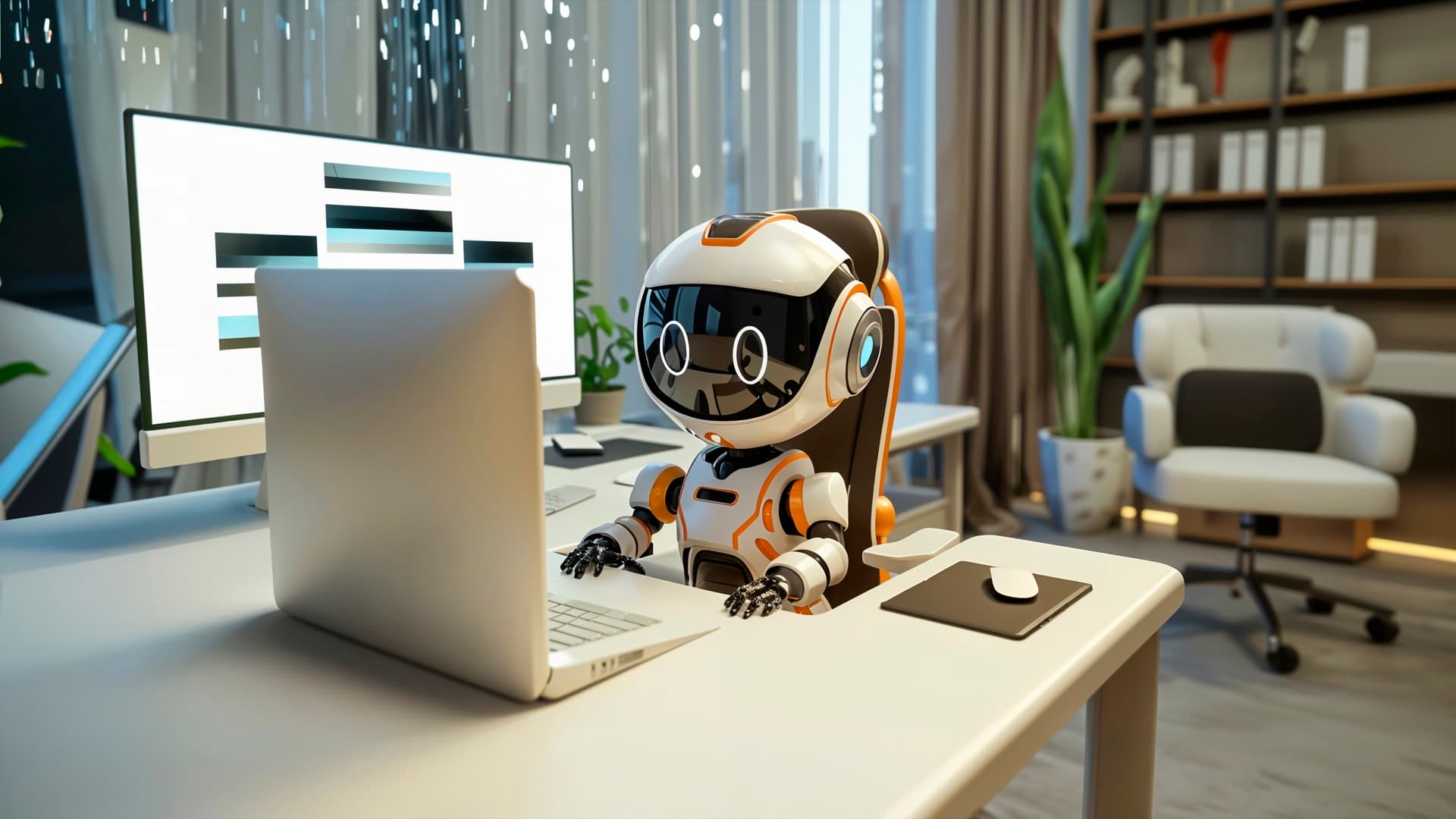
Traditional Automation Is A Fancy To-Do List. AI Agents Actually Think.
"The biggest mistake businesses make is assuming automation and AI agents are the same thing. They aren't even playing the same game."
I'm going to start with a slightly controversial opinion. Most businesses calling their software "AI" are really talking about automation with better marketing. Somewhere along the way, workflow automation got a fresh coat of paint and suddenly every product became an AI platform.
The problem is that automation and AI agents solve completely different problems. Traditional automation is great at following instructions. AI agents are designed to understand goals, adapt to changing situations, and make decisions when the path forward isn't obvious.
That's why I think so many businesses are confused right now. They hear both technologies being discussed in the same conversations, but the customer experiences they create are dramatically different.
We touched on this shift in AI Agents for Small Businesses: What Actually Matters in 2026. The real value isn't automation itself. It's adaptability.
Automation Follows Rules. AI Agents Adapt.
Traditional automation is essentially a collection of rules. If a customer submits a form, send an email. If somebody books an appointment, create a calendar event. If a payment fails, trigger a notification.
Useful? Absolutely. Intelligent? Not really.
The challenge is that customers rarely follow perfect workflows. They ask unexpected questions, change their minds, provide incomplete information, and create situations that developers never anticipated.
That's where traditional automation starts breaking down. It follows the script beautifully until reality decides to ignore the script.
AI agents approach the problem differently. Instead of asking "Which rule should I execute?" they ask "What is this customer trying to accomplish?"
That difference might sound small, but it changes everything.
Traditional Automation Follows Rules. AI Agents Chase Outcomes.
This might be the simplest way to explain the difference between the two technologies. Traditional automation asks, “What rule should I execute next?” while AI agents ask, “What outcome is this customer trying to achieve?”. That distinction changes everything.
A traditional automation workflow might successfully complete every step it was programmed to perform and still deliver a terrible customer experience. We've all seen it happen. Endless ticket routing. Automated emails nobody reads. Support flows that technically work but feel frustrating.
AI agents focus on the destination rather than the predefined route. If a customer wants to reschedule an appointment, resolve a billing issue, or find the right product recommendation, the agent can adapt its path while staying focused on the outcome.
That's why I think agentic systems will replace large portions of traditional automation over the next few years. Not because automation is useless. Because customers live in the real world, and the real world rarely follows flowcharts.
We discussed similar ideas in Autonomous Customer Support: How AI Is Replacing Traditional Support Teams. The systems creating the best customer experiences are the ones that understand goals rather than blindly executing instructions.
The businesses creating exceptional customer experiences in 2026 won't necessarily have the most workflows. They'll have systems that know how to adapt when reality refuses to cooperate.
Automation Isn't Dying. It's Becoming The Foundation Beneath AI Agents.
Here's the part many people get wrong when discussing AI agents and traditional automation. They assume one technology will replace the other. I don't think that's what's happening at all. Traditional automation remains incredibly valuable because businesses still need workflows, integrations, notifications, CRM updates, routing systems, lead assignment, scheduling infrastructure, and operational processes. None of that disappears simply because AI agents have become more capable.
What's actually changing is the decision making layer sitting on top of those systems. Instead of customers interacting directly with rigid workflows, AI agents are increasingly becoming the interface between customers and automation. The automation still handles execution, but the AI handles understanding, reasoning, adaptation, and decision-making. In many ways, AI agents are making traditional automation more useful by helping it operate in situations that don't follow predefined paths.
That's why I don't think the future is AI agents versus traditional automation. The future is AI agents powered by traditional automation underneath. One provides the operational infrastructure. The other provides the intelligence needed to navigate uncertainty. Businesses that combine both effectively will create dramatically better customer experiences than those relying entirely on one approach or the other.
We're already seeing this evolution across customer support automation, Voice AI, AI receptionists, AI voice assistants, and autonomous support systems. The companies delivering the best customer experiences aren't necessarily building the biggest workflow diagrams anymore. They're building systems that can understand customer intent, adapt when conversations go off script, and still leverage reliable automation behind the scenes to execute tasks quickly and accurately.
The best automation follows instructions. The best AI agents understand intentions.
Stop Building Bigger Workflows. Start Building Smarter Customer Experiences.
Discover how RhythmiqCX combines AI agents, AI voice assistants, Voice AI, and autonomous customer support to help businesses move beyond rigid automation and create customer experiences that actually adapt in real time.