Restaurants Don't Have A Staffing Problem. They Have An Availability Problem.
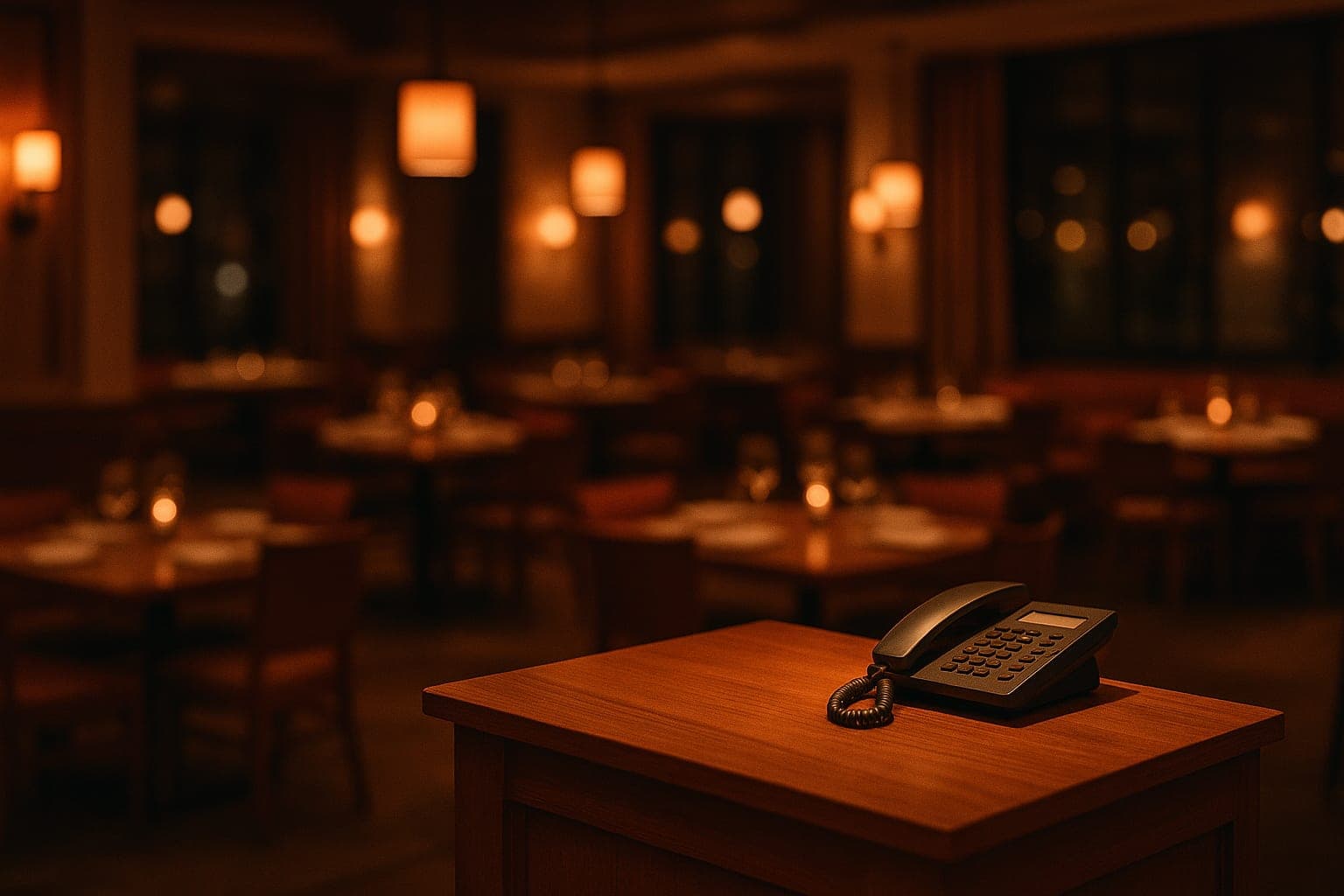
"The phone rings during dinner rush. Nobody answers. Another reservation disappears."
I've noticed something interesting whenever restaurant owners talk about growth. They usually focus on food quality, marketing, customer reviews, staffing, and location. Those things absolutely matter. But there's one problem that quietly costs restaurants money every single day, and most owners barely track it.
Unanswered phone calls.
Not because employees don't care. Not because the team isn't working hard enough. The reality is much simpler. Restaurants are busiest at the exact moments customers are trying to call. While staff are seating guests, taking orders, serving food, and managing operations, the phone keeps ringing.
Those missed opportunities add up quickly. Every unanswered call creates a chance for lost restaurant bookings. Customers don't usually keep calling back. They move on to the next option.
That's why more operators are turning to an AI phone receptionist and an AI receptionist for restaurants. Instead of relying entirely on staff availability, restaurants can answer every call, capture reservations, and support guests even during the busiest hours of the day.
We discussed a similar idea in Why Hospitality Businesses Lose Bookings After Business Hours. Customers don't stop calling when businesses get busy. The businesses that answer first increasingly win the booking.
Most Restaurants Underestimate The Cost Of Missed Calls.
Restaurant owners track food costs, labor costs, inventory costs, marketing costs, and online reviews. Yet many have no idea how many reservations are lost because nobody answered the phone.
That's surprising because missed restaurant callsoften come from customers who are already ready to buy. They aren't casually browsing. They're actively trying to reserve a table, ask about availability, confirm hours, or plan an event.
Every unanswered call introduces friction into the process. And in hospitality, friction is dangerous. The easier it is for customers to move to a competitor, the more likely they will.
That's why I think restaurants don't actually have a phone problem. They have an availability problem. Customers expect answers immediately, and traditional staffing models simply can't guarantee that every call gets answered.
How Many Reservations Are You Losing Every Week?
See how RhythmiqCX helps restaurants answer every call, reduce missed restaurant calls, and capture more bookings with an AI phone receptionist available 24/7.
Customers Usually Call When They're Ready To Book.
One thing many restaurant owners overlook is that customers rarely call just to browse. Most people pick up the phone when they're close to making a decision. They want to reserve a table, ask about availability, check whether the restaurant can accommodate a larger group, or confirm details before committing.
That's what makes missed restaurant calls so expensive. These aren't random inquiries. They're often high-intent customers who are already moving toward a reservation. When nobody answers, the booking momentum disappears.
Think about your own behavior. If you call a restaurant and nobody picks up, how long do you wait before trying another option? Most customers don't leave voicemails. They don't patiently wait for a callback. They simply move on.
That's why more operators are replacing voicemail with a dedicated restaurant call answering service. The goal isn't just answering calls. The goal is making sure customers receive help at the exact moment they're ready to book.
We touched on this in How AI Voice Assistants Help Restaurants Capture More Reservations. Restaurants that respond first often capture bookings that competitors never even realize they lost.
AI Receptionists Are Changing The Economics Of Restaurant Calls.
This is where things start getting interesting. Historically, restaurants had only two options. Hire more staff or accept that some calls would go unanswered. Neither solution was particularly attractive.
Today, restaurants have a third option. An AI phone receptionist can answer every incoming call, collect reservation information, answer common questions, and provide immediate assistance without requiring additional headcount.
Modern Voice AI for restaurants has improved dramatically over the last few years. Powered by advanced speech to text api, Voice api, speech synthesis api, and text to speech ai infrastructure, today's systems can understand natural conversations and respond far more effectively than traditional automated phone menus.
Restaurants are also benefiting from advances in ai voice technology, ai voice generator, voice synthesis ai, voice cloning software, ai voice cloning, real time voice cloning, instant voice cloning, and voice cloning api solutions. Combined with conversational ai voice bot workflows and natural ai voiceover systems, these technologies help create experiences that feel significantly more helpful than voicemail.
More importantly, they enable restaurant reservation automation and 24/7 restaurant call answering. Customers can reserve tables, ask questions, and receive support even during dinner rush, weekends, holidays, or after-hours periods when staff are unavailable.
Personally, I think this is why adoption is accelerating so quickly. Restaurants aren't implementing AI because it's trendy. They're implementing it because every answered call represents a potential booking.
Availability Is Becoming More Valuable Than Headcount.
One of the biggest misconceptions I see in hospitality is the belief that growth always requires more people. More hosts. More receptionists. More staff answering phones. While hiring certainly has its place, I don't think staffing alone solves the underlying problem.
Restaurants don't lose bookings because employees aren't working hard enough. They lose bookings because customer demand doesn't arrive on a predictable schedule. Calls come during dinner rush. Reservation requests arrive after closing. Questions come in when staff are already helping guests inside the restaurant.
That's why I think availability has quietly become one of the most important competitive advantages in hospitality. The restaurants winning today aren't necessarily the restaurants with the biggest teams. They're the restaurants that remain available whenever customers decide to reach out.
An AI receptionist for restaurants helps close that availability gap. Instead of sending callers to voicemail, businesses can provide immediate support through intelligent restaurant phone automation. Customers get answers, reservations get captured, and opportunities stop slipping through the cracks.
We explored a similar idea in Why Hospitality Businesses Lose Bookings After Business Hours. Businesses don't need to stay physically open twenty-four hours a day. They simply need systems that remain available when customers are ready to buy.
That's why I view AI phone receptionists as leverage tools rather than staffing tools. They don't replace hospitality. They extend it.
The Future Of Restaurant Calls Is Instant Response.
Every major customer-service shift follows the same pattern. First, it feels optional. Then it becomes a competitive advantage. Eventually, customers begin expecting it.
Online reservations followed that path. Online ordering followed that path. Mobile apps followed that path. I believe AI-powered call handling is now following the exact same trajectory.
A few years from now, customers probably won't be impressed that a restaurant answered instantly. They'll simply assume that's how modern businesses operate. They'll expect someone to answer, provide information, capture reservations, and help them move forward immediately.
That's why I think restaurant owners are asking the wrong question. They're asking whether an AI phone receptionist is worth adopting. I think the better question is whether they'll adopt it before competitors do.
Once customers become accustomed to immediate support, intelligent reservation handling, and 24/7 restaurant call answering, it's incredibly difficult to go back to voicemail and missed opportunities.
Whether it's an AI voice assistant for restaurants, advanced Voice AI for restaurants, a dedicated restaurant call answering service, or intelligent restaurant reservation automation, the direction feels increasingly obvious. Restaurants that answer first will increasingly be the restaurants that fill tables first.
The future won't belong to restaurants with the biggest teams. It will belong to restaurants that are available whenever customers are ready to book.
Never Miss Another Reservation Opportunity
See how RhythmiqCX helps restaurants capture more bookings with an AI phone receptionist, AI receptionist for restaurants, restaurant phone automation, and 24/7 restaurant call answering.