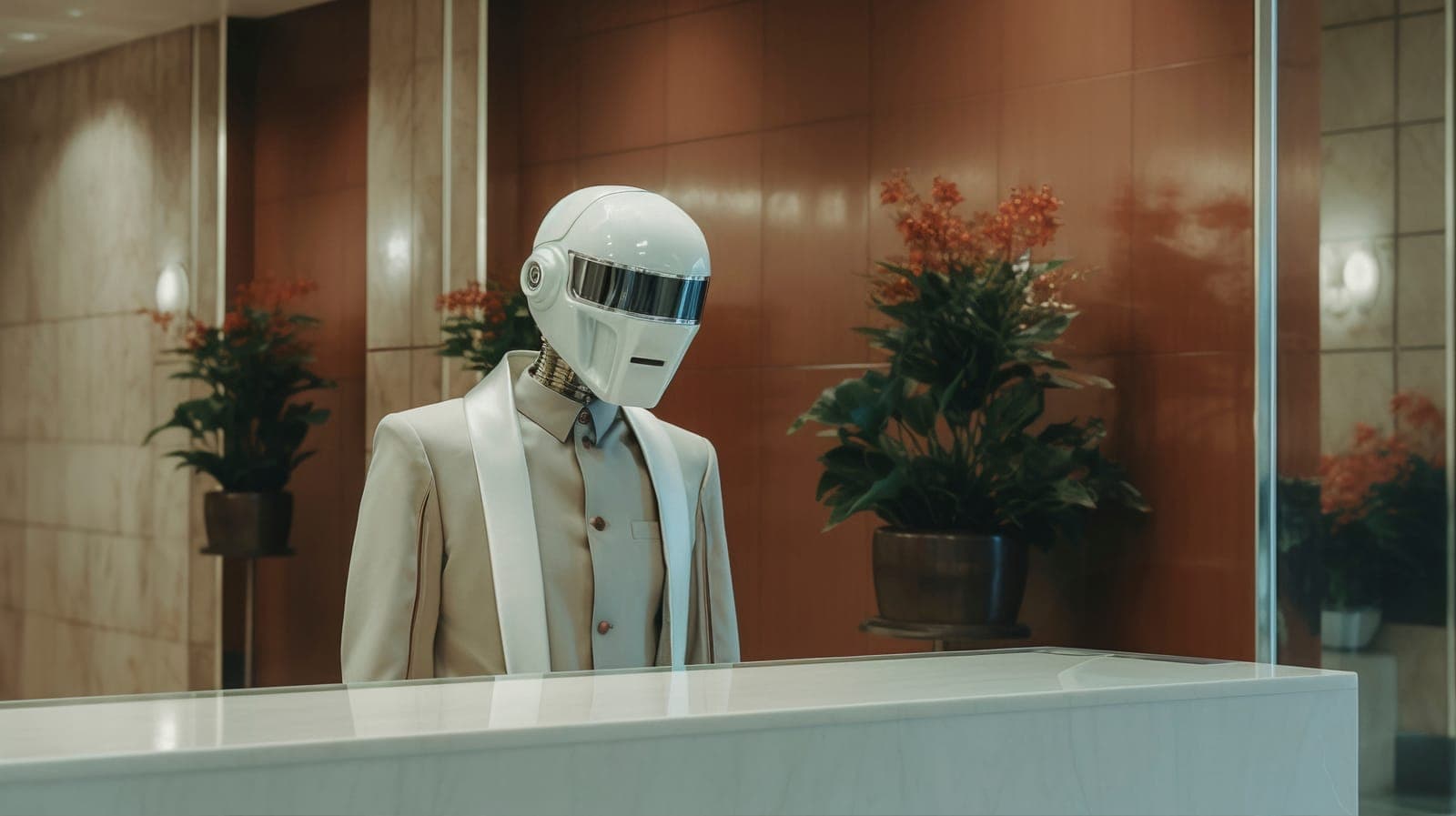
The Day a Robot Killed a $40K Deal (And It Was Our Fault)
A mid-size legal firm gave our AI receptionist a week-long trial. On day three, a distressed caller asked to speak with a senior attorney. Our voice confidently labeled “warm and professional” — replied in a cheerful sing-song: “Absolutely! I'd love to help connect you today!”. Priya pulled the plug by Friday: “It sounded like it was offering me a free cruise, not helping someone through a legal crisis.”
That $40K loss reframed everything. The right question was never “which voice sounds most human?” It was: which voice fits the emotional context of your callers?
A receptionist's job isn't to sound impressive. It's to make the person on the other end feel like they called the right place.
Most businesses pick an AI voice the same way they pick a ringtone vibe check, gut call, done. If you've read The First 3 Seconds of a Voice Call Decide Customer Trust, you know how fast the wrong tone ends a relationship. Here's what to actually evaluate.
The 3 Dimensions Nobody Benchmarks (But Everyone Should)
When businesses go hunting for the best rated AI virtual receptionist voice, they obsess over two things: naturalness and clarity. Fair enough those matter. But they're table stakes. Here's what actually separates good from great:
Dimension 01
Tonal Range
Can it shift from warm to efficient without sounding bipolar? A great AI receptionist voice has dynamic range, not just one “professional” setting baked in forever.
Dimension 02
Pause Intelligence
Does it know when to breathe? Awkward pauses or zero pauses both feel wrong. The best systems know silence is part of language — and they use it intentionally.
Dimension 03
Error Recovery Grace
When it mishears something (and it will), does it recover like a confident human or panic like a broken IVR? Traditional phone trees fail exactly here it's the core reason IVR systems are dying and customers won't mourn them.
We tested this across industries. Healthcare callers need measured, reassuring cadence. E-commerce callers want brisk and confident. Legal and finance callers want authoritative with zero filler words. Our e-commerce breakdown shows how dramatically tone affects conversion and cart recovery and that's before you even pick up the phone.
Hot take: “Natural-sounding” is not a feature. It's the floor. If that's the highest praise in a demo, walk away.
The Voice Tier List Nobody Asked For But Everyone Needs
After running real call data across hundreds of interactions, here's our brutally honest take on how different AI voice categories actually perform for virtual reception. Not lab tests. Real calls. Real people. Real drop-offs.
| Voice Type | Best For | Caller Retention | Verdict |
|---|---|---|---|
| Neural TTS (Generic)Most “starter” plans | Basic FAQ routing | Low | Skip it |
| Cloned / Branded VoiceCustom trained on real samples | High-trust industries (legal, medical) | High | Strong pick |
| Adaptive Emotional VoiceAdjusts tone contextually | Complex multi-intent calls | Highest | Best in class |
| Speed-Optimized VoiceSub-300ms response latency | High-volume e-commerce & scheduling | Medium-High | Depends on use case |
The category everyone ignores is latency. Voice AI vs Chatbots comes down to this more than anything: sub-500ms response latency isn't a performance metric, it's a trust metric. When your AI pauses for 1.5 seconds before responding, callers don't think “processing.” They think “is this thing broken?”
Speed is not a UX feature. In voice AI, speed IS the personality. A slow voice sounds dumb, no matter how well it speaks.
Is It Actually the Best AI Voice for Virtual Receptionists Or Just the Best Demo?
Here's a thing vendors will never put in their pitch deck: AI voices perform differently in controlled demos vs. real calls.
In a demo, callers are cooperative. They speak clearly. They don't interrupt. They don't ask three questions in one sentence. They don't have background noise. Real callers do all of this constantly, often while driving.
This is what we call the demo illusion and it's why so many businesses end up with a voice that sounded incredible in the meeting room and embarrassing on live calls.
The Demo vs. Reality Checklist
Test with interruptions Start talking mid-sentence and see what happens. Does it hold state? Most don't. Read The Hidden State Problem in Voice AI Conversations this is deeper than it sounds.
Test with noise — Background TV, street noise, bad cell signal. The voice is only part of the stack. ASR quality matters enormously.
Test emotional mismatch Send a frustrated caller. An angry one. A confused one. Does the voice adapt, or stay relentlessly cheerful? Voice AI is great at FAQs and terrible at exceptions make sure you understand this tradeoff before you commit.
Test long calls After 90 seconds, does it still feel natural? Or does the rhythm feel mechanical and exhausting?
The businesses that get this right aren't necessarily using the most sophisticated voice. They're using the voice that performs under real conditions, not demo conditions. Most vendors are not going to walk you through that evaluation proactively. That's your job to demand it.
Rule of thumb: if you can't test a voice with a genuinely annoyed caller in under an hour, the vendor isn't confident in their product.
Our Actual Framework for Picking the Right Voice (Steal It)
After everything we've built and broken, here's the framework we now use internally at RhythmiqCX before deploying any voice to production. It's not glamorous. It works.
Map your caller's emotional state at the moment of calling
Not their persona. Their state. Are they in a hurry? Confused? Upset? Hopeful? This determines the tone floor your voice must hit before anything else.
Identify your industry's trust signal
Healthcare callers need measured authority. E-commerce callers want brisk helpfulness. Legal callers want zero warmth-fluff. Choose accordingly and don't let your vendor choose for you.
Benchmark latency under load, not in isolation
Ask vendors for p95 latency numbers under concurrent call load. If they don't have them or hesitate that's your answer.
Run a hostile caller session
Interrupt the bot. Give it ambiguous inputs. See what it does with dead air. The voice is only as good as the system behind it. This is where autonomous customer support design separates the real from the theatrical.
Listen to 10 full calls before deciding
Not clips. Not demos. Full calls, with all the messiness of real interaction. You'll know in 10 calls what 10 demo meetings can't tell you.
The AI receptionist space is noisy. Everyone is claiming to have the best AI voice for handling virtual reception tasks. Most of them are optimizing for demo performance, not production reliability.
We're not going to tell you RhythmiqCX is perfect. We'll tell you it's been tested on real calls, by real frustrated callers, in real noisy environments and we've iterated on every rough edge we found. And if you want to understand why the shift from IVR to AI voice is irreversible, our post on why IVR systems are dying lays out the structural reasons in full.
The best AI receptionist voice isn't the one that sounds the most human. It's the one your callers stop noticing because the conversation just works.
Ready to Hear a Voice That Actually Works?
See how RhythmiqCX handles real calls not demo calls. Hostile callers, background noise, ambiguous questions, and all. Book a live session and test it yourself.